

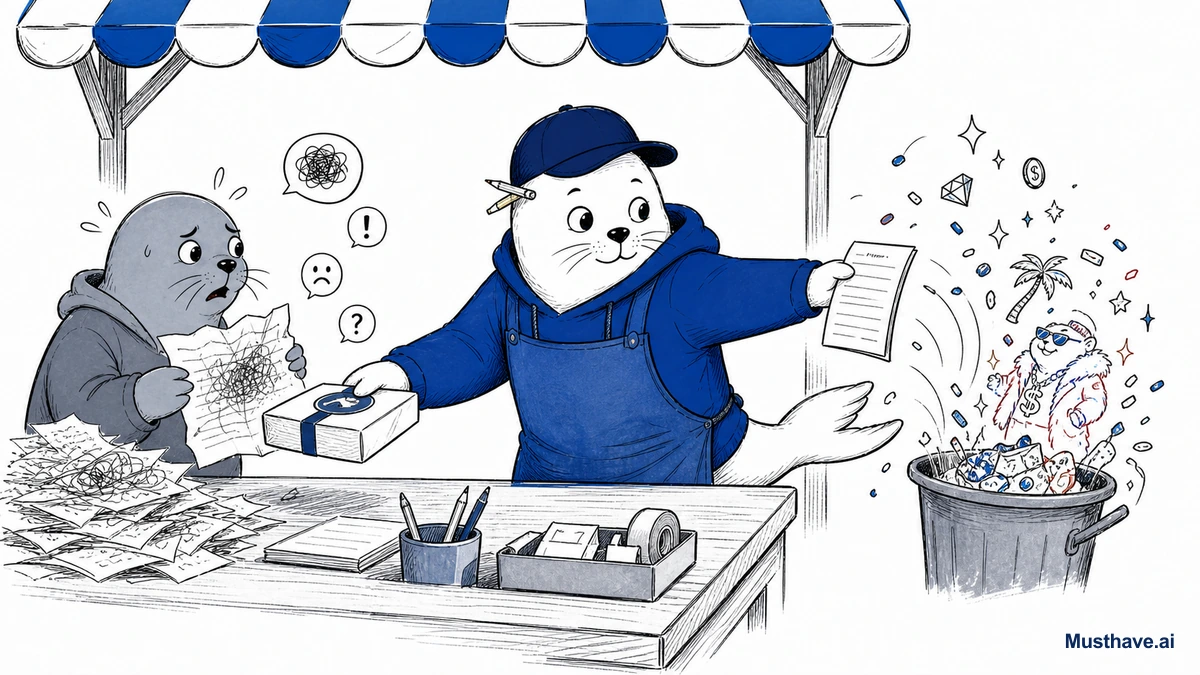
I’ve spent long enough watching the “make money with AI” hype cycle to get thoroughly tired of it. So instead of the press-release version, here’s the honest map, the one I’d actually give a friend who wants real income, not guru math.
Stop hunting for magic and pick a lane
Let’s start with the truth nobody selling a course wants to say out loud: AI multiplies skill, but it does not invent a customer. The people quietly making money treat these tools as leverage for content and freelancing, not as a slot machine that pays out if you pull the handle enough times.
I’ve been building digital businesses for two decades, and the underlying pattern has never changed: offer, distribution, proof. That’s the whole game. AI didn’t rewrite it, it just shortened the production loop between those three things.
So if your plan is “generate 500 listings and hope,” I’ve got bad news. You’re not early. You’re just noisy.
What actually converts in this lane
Here’s where the money really comes from. Buyers pay for outcomes, a ranked page, a finished book, a clean design pack, a research brief, a newsletter people genuinely open. Nobody, and I mean nobody, is paying you for prompt screenshots.
- Content & SEO: use AI for briefs, drafts, and internal links, then add the lived experience and original examples that make it worth ranking.
- Amazon KDP: validate the niche first, draft with AI, package it carefully, and launch with an actual plan instead of a prayer.
- Merch & POD: nail the audience’s language, keep your files clean, respect trademark hygiene, and make sure the thumbnail reads at a glance.
- Services: productize the scope, promise clear deliverables, and let the AI do its work quietly behind the scenes.
A 90-day system that beats tool FOMO
You don’t need more tools. You need a loop you’ll actually run. Here’s the one I’d hand you.
- Choose one lane and one audience, resist the urge to hedge.
- Ship weekly, in public, so the proof piles up where people can see it.
- Track revenue and hours worked, not token counts or other vanity numbers.
- Commit to one writing model, one image tool, and one automation.
- Cancel anything you haven’t touched in 14 days, guilt-free.
That’s it. It’s boring on purpose, because boring is what compounds.
The quality rules I won’t break
This is the part that keeps you in business when the algorithm shifts. If you wouldn’t put your own name on it, don’t publish it. If a marketplace listing invents features the product doesn’t have, that’s not marketing, that’s lying, and it catches up with you.
And if your SEO content has zero lived experience behind it, it will rot the moment readers and ranking systems get a little smarter (they always do). Here’s the uncomfortable reality: AI has made it cheaper than ever to be mediocre at scale. Your entire job is to refuse that trap.
What to do this week
Enough theory. Pick one offer you can explain in a single sentence. Use AI to draft the assets around it. Then spend the majority of your time on distribution and feedback, because that’s where the needle actually moves.
The money lives in the last mile, the email that gets sent, the listing that goes live, the client call that closes. No tool replaces that mile, and honestly, that’s good news for anyone willing to walk it.
Messy reps beat perfect plans
If you take one thing from this, make it this: ship something imperfect in your chosen lane within the next seven days. Not a polished system. Not a 40-tab research binge. Something real, out in the world, collecting feedback.
That’s how digital income actually compounds, with or without the latest model drop. The people who win aren’t the ones with the most subscriptions. They’re the ones with the tightest loop between draft, ship, and learn.
The only two numbers worth tracking
Forget follower counts, token usage, and every other vanity metric. In any AI money lane, track exactly two numbers each week: revenue earned in that lane, and hours you spent on it. Divide one by the other and watch the trend. If your revenue-per-hour isn’t climbing after a month, the problem is almost never the AI tool, it’s the offer or the distribution. This is the check that tells you whether to double down or change lanes, and it’s the one number no course sells you because it can’t be faked.
Which lane are you picking first, content, KDP, POD, or services? Drop it in the comments and tell me the one-sentence offer you’re building. I’ll tell you where I’d focus.
Verification sources and related guides
Primary reference: FTC advertising and marketing guidance. This is the controlling platform or government guidance. Recheck it before publishing, deploying, or selling because rules and eligibility can change.