
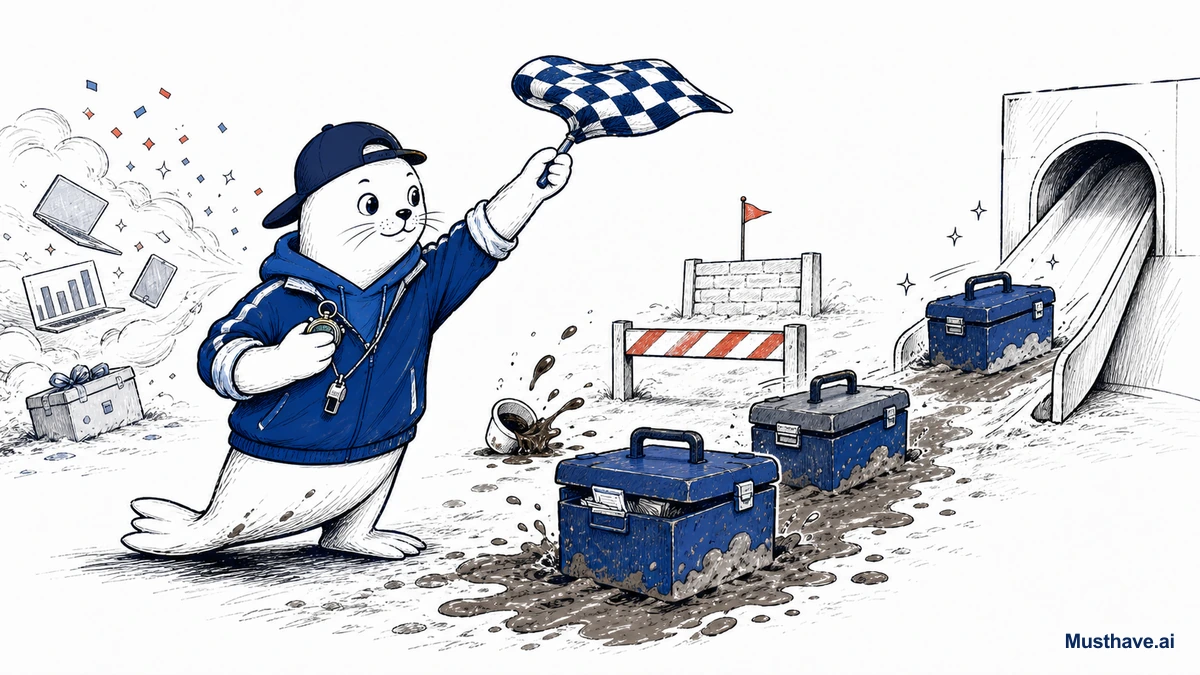
Every AI tool looks brilliant in its launch video. The real question is whether it’s still open on your screen three weeks later, quietly doing actual work. That gap (between the polished demo and the Monday-morning reality) is the entire reason The Musthave Selection exists.
Why a tool actually makes the list
Let me be blunt about the standard here, because it matters. A tool lands on The Musthave Selection only if I’d hand it to a friend who’s busy, skeptical, and already drowning in half-used free trials. That’s a high bar, and most tools don’t clear it.
The test isn’t whether something dazzles on launch day. It’s whether it’s still useful in week two, when the novelty has worn off and you just need to get something shipped. I run everything through real work, client drafts, listing images, research dumps, a product page that has to go live by Friday. If a tool only shines in a staged demo, it never makes the cut.
Is that slower than chasing every hype cycle? Absolutely. It’s also how you avoid ending up with a graveyard of logins you never open again.
The three things I actually measure
When I’m testing something new, I’m really only looking for three outcomes: faster first drafts, cleaner final assets, or fewer tabs between the idea and hitting publish. Here’s how that breaks down.
- Speed: does it cut a painful step without quietly creating two new ones?
- Quality: can I ship with light edits, or does every output need a full rewrite?
- Trust: does it fail in obvious ways I can catch, or subtle ways that embarrass me in front of a client later?
That last one is the dealbreaker. If a product fails on trust, I honestly don’t care how clever the marketing sounds, it’s off the list.
The five-prompt bake-off you should steal
Here’s the habit I’d hand you if I could only give you one. Every tool I consider sits next to its obvious rivals, ChatGPT, Claude, Gemini, Midjourney, Ideogram, Kittl, whatever fits the job. The question is never “is this cool?” It’s “does it win this specific job more often than what I already use?”
So I keep a short bake-off: five prompts pulled straight from real work, each one scored on quality, speed, and cost. The winner keeps the tab. The loser gets demoted, no funeral required.
You should copy that exact process this week. Loyalty to brands is expensive. Loyalty to outcomes is how you stay flexible, and how freelancers stay free.
Who should skip the whole thing
This isn’t for everyone, and I’d rather say so up front. If you only need a certain tool once a year, don’t buy an annual plan just because it wears a Musthave badge. If you work in a regulated industry, read the data rules before you paste anything sensitive into a chat box. And if you’re here hoping for autopilot riches, this site is going to disappoint you, on purpose.
The Selection is for people who already have a craft (writing, design, selling, building) and want leverage, not a personality transplant.
A workflow you can copy this week
If you want to get more out of any AI tool starting today, try running your work through this simple loop instead of firing off one hopeful prompt and praying.
- Write the job in one sentence before you open the tool.
- Run three variants, not one “perfect” prompt.
- Keep the best 20% and delete the rest without guilt.
- Finish with a human pass: voice, facts, brand.
- Note what worked in a swipe file so next week is faster.
None of that is complicated. But the people who do it consistently ship far more than the ones hunting for a magic prompt.
Field notes from two decades of shipping
After twenty-plus years building digital products, my rule has boiled down to one line: tools should shrink the distance between an idea and proof that it works. If a model, generator, or agent doesn’t move a real metric (time saved, conversion, client approval, fewer revisions) then it’s a distraction dressed up as progress.
When something goes wrong, I’ve learned not to blame “AI” as some faceless monolith. I ask whether the brief was clear, whether the data was sensitive, and whether I skipped a human review step. Most disasters, it turns out, are process failures with a chatbot standing in the middle of them.
And please, protect confidential data. A free demo is not your secure vault. When in doubt, anonymize it or keep it offline entirely.
The whole Musthave standard, in one breath
So that’s it. If a tool helps you finish a real deliverable this week, it earned its place. If it only generates screenshots for LinkedIn, unsubscribe and move on with your day.
Short list. High bar. Tools that respect your time. That’s the entire promise, and I’d rather recommend five things you’ll actually use than fifty you’ll forget by next month.
The two-week retention test
Here’s the specific gate a tool has to pass before it earns a permanent spot, and the one habit that’s saved me the most money. The moment I start a trial, I set a calendar reminder for day 14. When it fires, I ask three questions: did I open this tool without forcing myself to, did it save more time than it created in cleanup, and would I actually be annoyed if it vanished tomorrow? If any answer is no, I cancel before the trial converts. Most tools fail on the first question, you forget they exist by day four. That single reminder quietly kills the subscriptions that would otherwise pile up.
What’s the one AI tool that survived past your honeymoon week, and which one quietly died in a browser tab? Tell me in the comments; I’m always hunting for the next pick worth trusting.
Verification sources and related guides
Primary reference: NIST AI Risk Management Framework. This is an authoritative framework or standards source. The practical recommendations in this article remain Musthave.ai analysis.