

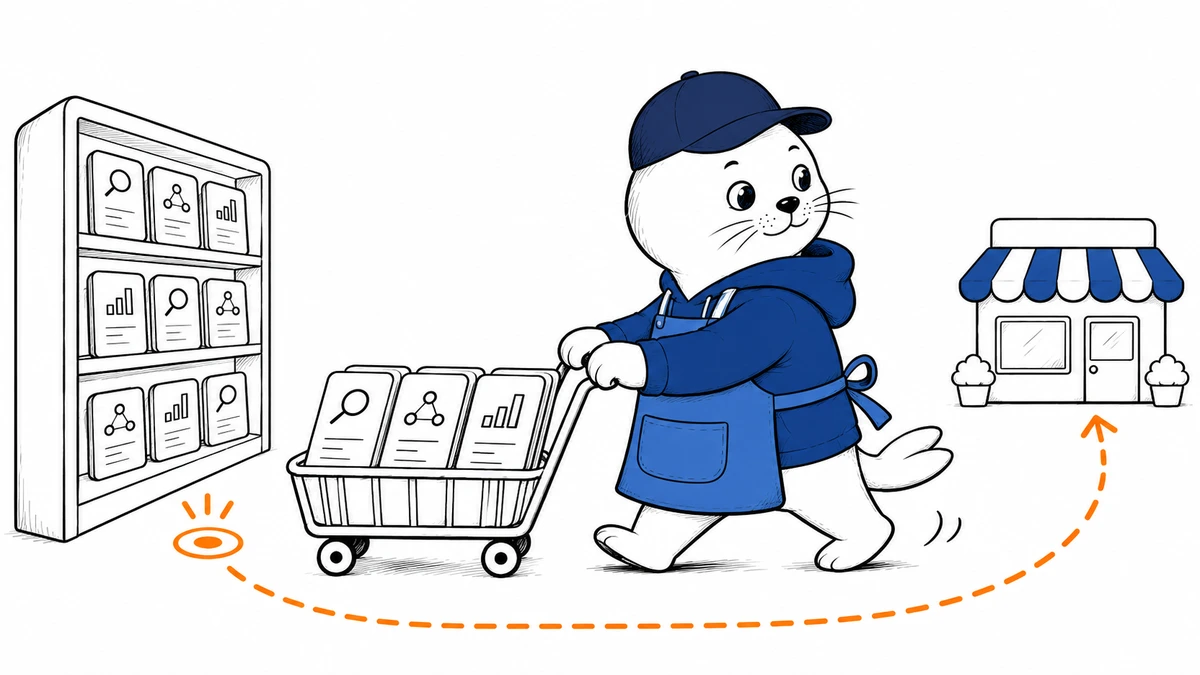
A product can appear in an AI shopping journey while the merchant still owns the checkout and the order.
Amazon introduced a Shop Direct Merchant Workspace on November 4, giving eligible merchants a self-service route to provide product catalogs. The free workspace supports website verification and catalog feeds, with visibility into participation and active products. The announcement connects that catalog access to discovery across Amazon and Alexa for Shopping.
A catalog feed is the starting point
Amazon describes support for existing feeds and providers including Feedonomics, Salsify, CEDCommerce and VersaFeed. Its developer documentation also describes an integration path via the Selling Partner API. A merchant can therefore review available feed routes before building another catalog export.
The useful question is whether the submitted feed carries the product information customers need and stays aligned with the store. Prices, stock, and product links should point to the same offer the shopper finds after leaving Amazon. Feed acceptance alone does not establish the quality of that handoff.
Discovery and purchase can follow different routes
| Route | Customer journey | Merchant implication |
|---|---|---|
| Shop Direct discovery | A shopper finds a product through Amazon’s shopping experience | Catalog information needs to describe the current offer |
| Merchant-site checkout | Shop Direct sends the shopper to the merchant website with an exit notice | The merchant’s own site handles the shopping handoff |
| Buy for Me | An eligible flow can let an agent make the purchase | Review the applicable purchase flow and merchant requirements separately |
That separation matters for measurement. A catalog appearance, a visit to the merchant site, and a completed order are different events. Track them separately wherever reporting permits. An increase in submitted or active products should not be reported as an increase in sales.
The store still needs to complete the sale
Amazon says merchants remain responsible for inventory, pricing, fulfillment, and customer service. Participation is free, and merchants can opt out. Neither free participation nor catalog inclusion guarantees traffic, placement or orders.
The customer availability described in the announcement is in the United States across Amazon’s website, mobile shopping experience, and Alexa for Shopping. Merchants should confirm eligibility for their own business and catalog. The announcement is not a promise that every store worldwide can join.
Review the handoff before adding more products
For a small store, I would first follow one eligible product from the submitted feed to its destination page. Check whether the price, availability, and selected variant still match. Then examine the checkout and support details a customer sees. This is a proposed merchant review, not a transaction we performed.
The workspace creates another discovery route for an existing catalog. Its value will depend on the products shown, the customers reached, and the store’s ability to fulfill the resulting orders. Would you prioritize catalog coverage or a smaller set of products with a reliable checkout path?

Abdessalam Alaoui
I'm Abdessalam Alaoui, founder of Musthave.AI. I write practical guides to AI models, tools, generative media, and ways real people make money with this stuff. No press-release fluff. 20+ years shipping digital products; you'll also find my work around HowTik, Yumasty, and IncomeHelpful.