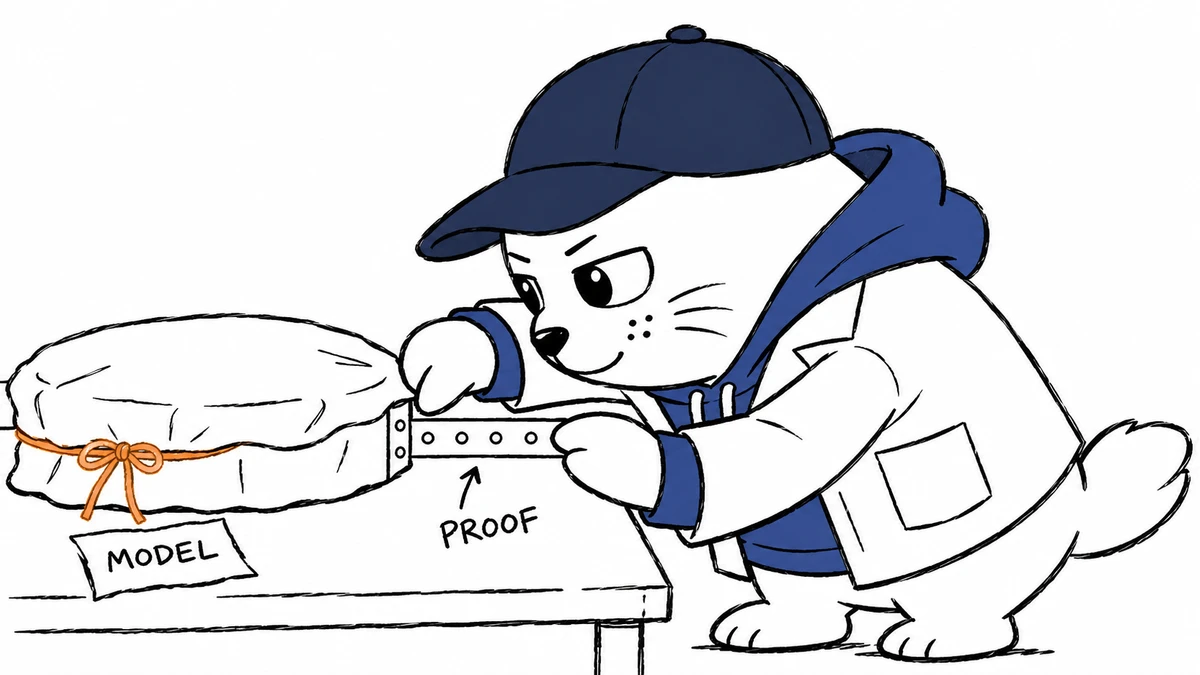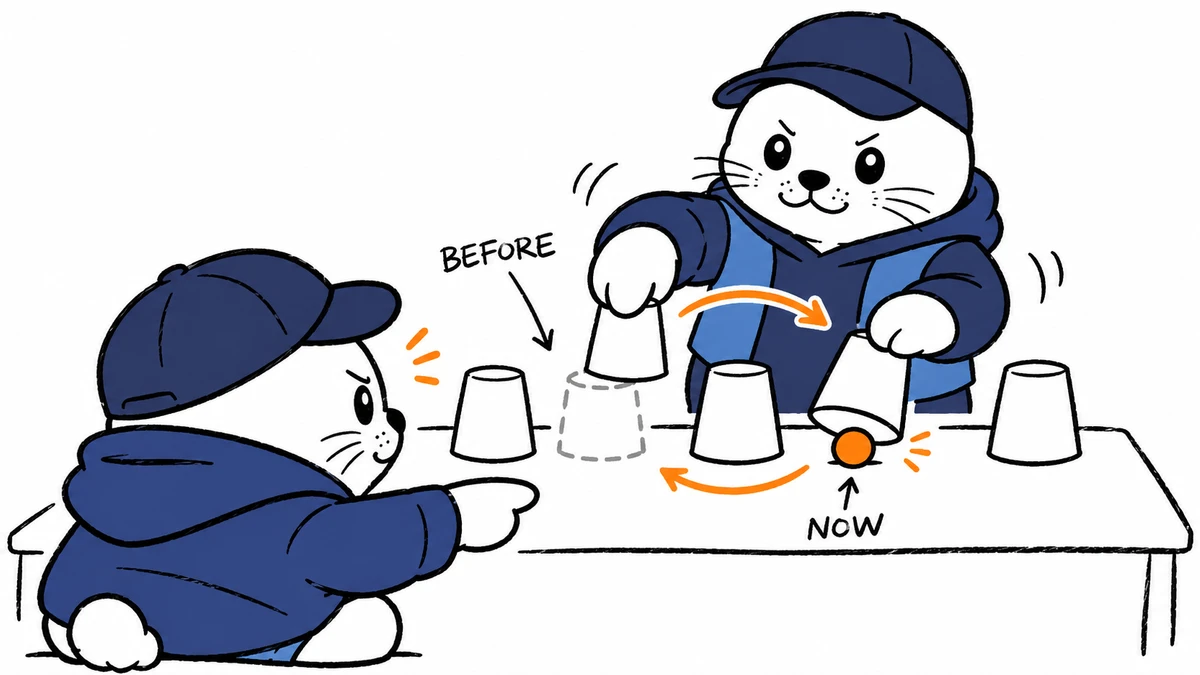
Finding an old statement is useful. Knowing whether a later event changed it can be harder.
AI2 introduced StateBench on November 3, releasing a benchmark for tracking changing state through long inputs. The announcement links public code, data, and a technical-report record.
Some questions need more than the latest sentence
The benchmark separates four difficulty levels. A fixed assignment only needs to be found. A reassignment by value needs the latest value. A self-referential update needs the previous state, while assignments between variables introduce dependencies across the sequence.
The generator code builds related tasks from canonical assignment traces. It can present the same underlying state problem in different forms. This helps distinguish difficulty in the dependency chain from difficulty in the wording.
A short trace shows the distinction
| Step | Current state after the step |
|---|---|
| Set A to 4 | A = 4 |
| Copy A into B | A = 4; B = 4 |
| Set A to 9 | A = 9; B = 4 |
At the end, B is still 4. Copying a value does not create a permanent link between the variables. A system that substitutes A’s latest value for B’s saved value reaches the wrong answer even if it finds every line.
This small example illustrates the task distinction. It does not measure a model’s accuracy or reproduce the benchmark.
Keep the experimental comparisons separate
AI2 reports declining accuracy on harder long-input tasks for the frontier models it evaluated. The researchers also study smaller recurrent and hybrid architectures, including models trained directly on these tasks.
Those comparisons answer different questions. A small model trained for a synthetic task and a general pretrained model don’t fit neatly into a simple product leaderboard. Architecture, training data, input format, and sequence length all matter.
The findings should not be generalized into a claim that a named model cannot read long documents. State tracking is one specific capability. We have not run the benchmark or independently reproduced the reported results.
Choose the failure your application needs to avoid
A document assistant that reports current ownership, a changing balance, or a final configuration needs to preserve updates and their dependencies. Testing only whether it can retrieve an earlier phrase leaves that requirement open.
Read the StateBench code and dataset record to inspect how the task is constructed. Our document parsing report addresses the separate problem of preserving source structure. Which changing fact would cause the most costly mistake in your application?

Abdessalam Alaoui
I'm Abdessalam Alaoui, founder of Musthave.AI. I write practical guides to AI models, tools, generative media, and ways real people make money with this stuff. No press-release fluff. 20+ years shipping digital products; you'll also find my work around HowTik, Yumasty, and IncomeHelpful.