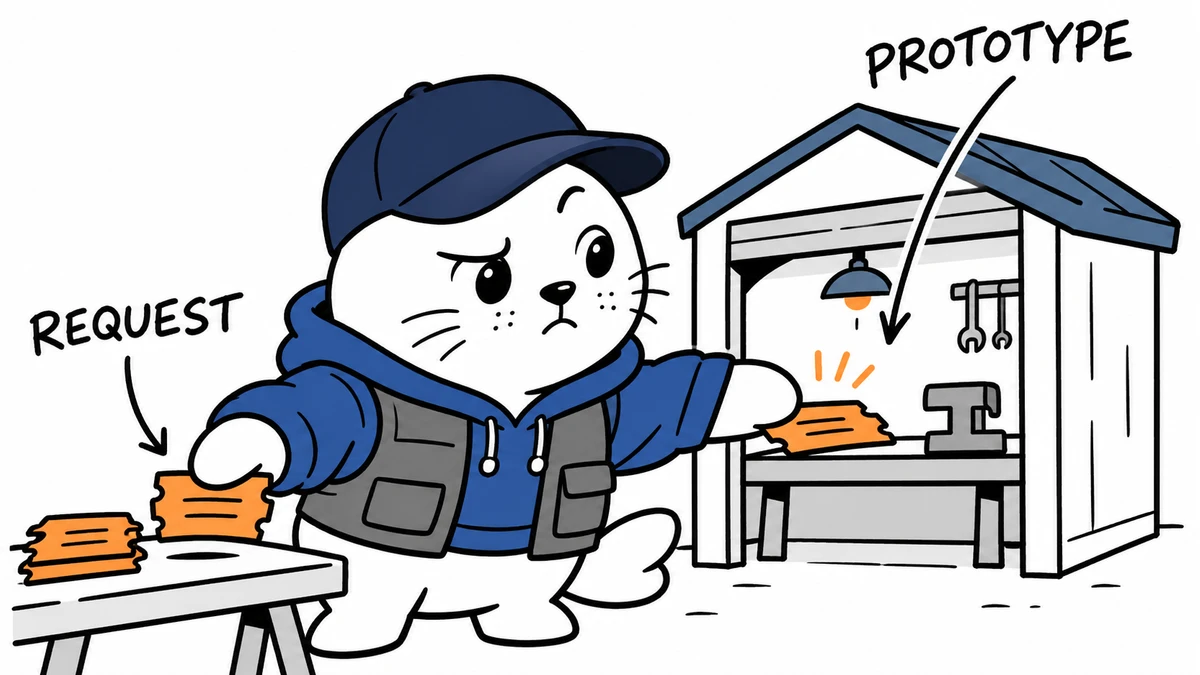


A coding agent that can read a visual brief still has to carry the project through many later decisions.
Meituan’s LongCat 2.5 is available through its API, according to the November 2 platform changelog. The release turns the earlier preview into a model for multimodal and long-running agent tasks.
The official Chinese technical announcement is also dated November 2. LongCat’s English landing page lists its article on November 1. Those records describe the announcement sequence; neither supports calling November 3 the first release date.
Visual input joins a long engineering workflow
Meituan describes a mixture-of-experts model with 1.6 trillion total parameters and about 48 billion active parameters per token. The company says it combines visual understanding with coding, including work across complex codebases and complete projects.
Meituan provides these architecture and capability descriptions. We have not run the model or reproduced its evaluations. The number of active parameters also does not establish the memory needed to host the full model.
A published API rate has a defined scope
| Token category | Limited-time USD price per million tokens |
|---|---|
| Uncached input | $0.30 |
| Cached input | $0.006 |
| Output | $1.20 |
The pricing page labels these rates as limited-time discounts. It does not turn an API trial into a permanent cost commitment.
For a simple calculation, one million uncached input tokens and 100,000 output tokens cost $0.42 at these displayed rates. That is $0.30 plus $0.12. Repeated attempts and other applicable charges can change the cost of a finished task.
A final API release is different from open weights
The changelog separates this release from LongCat-2.5-Preview, dated September 25. It also lists compatibility with several agent harnesses. Compatibility documentation is useful evidence of an integration path; it is not a test of every harness configuration.
We did not verify a downloadable LongCat 2.5 checkpoint and its license. Readers should therefore treat this story as an API release rather than an announcement of an unrestricted open-source model. Regional account eligibility was not tested.
Evaluate the project rather than one attractive output
A useful later trial could begin with a visual specification and a fixed repository snapshot. Record which requirements survive through implementation, revision, and final tests. Count accepted changes and repair work alongside tokens.
Our Chinese AI model coverage provides wider context. Which part of your workflow is harder for an agent: understanding the initial brief or keeping later edits consistent?

Abdessalam Alaoui
I'm Abdessalam Alaoui, founder of Musthave.AI. I write practical guides to AI models, tools, generative media, and ways real people make money with this stuff. No press-release fluff. 20+ years shipping digital products; you'll also find my work around HowTik, Yumasty, and IncomeHelpful.