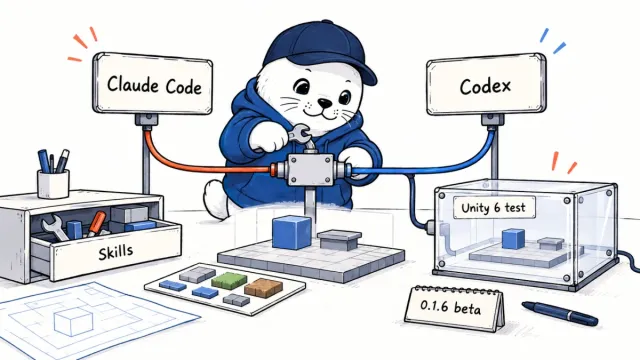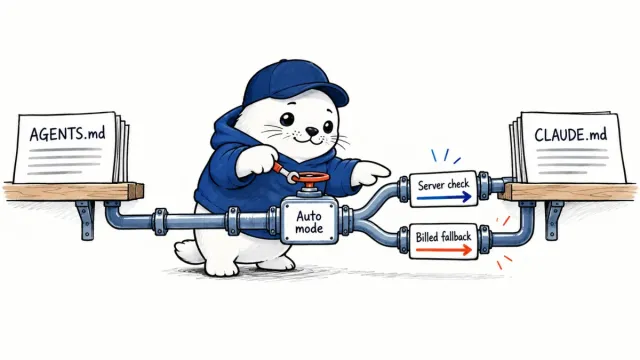


Here’s something that would’ve sounded absurd a couple of years ago: you can now build working software without knowing how to code. Not toy demos – actual tools that save you hours. Coding agents changed that, and it matters even if you’ll never call yourself an engineer.
What a coding agent actually does
First, let’s be clear about what makes an “agent” different from a chatbot that spits out code. A coding agent doesn’t just hand you a snippet and wish you luck. It works across your whole project, writing code in multiple files, running it, seeing the errors, fixing them, and trying again, all while telling you what it’s doing.
In practice, that means you can describe what you want in plain English (“build me a script that renames all these files by date”) and the agent handles the actual programming, iterating until it works. You’re the director. It’s the crew.
What a non-engineer can genuinely build
So what’s actually in reach if you’re not a developer? More than you’d think, as long as you keep the scope sensible.
- Automations: scripts that rename files, clean spreadsheets, resize images in bulk, or pull data from a site.
- Small tools: a simple calculator, a form, a landing page, a Chrome extension for your own use.
- Spreadsheet superpowers: custom formulas, macros, and data cleanup you’d never manage by hand.
- Prototypes: a rough working version of an app idea you can test before hiring anyone.
None of this makes you a software engineer. But it does mean the gap between “I have an idea” and “I have a working thing” just got a lot smaller.
The skill that actually matters now
Here’s the mindset shift. When an agent writes the code, your job stops being “can I write this?” and becomes “can I tell whether this is any good?” You review like a senior engineer would, reading critically, testing the output on real inputs, and asking “what happens when this breaks?”
You don’t need to understand every line. But you do need to check that it does what you asked, doesn’t do anything you didn’t ask, and fails in a way you’d notice. That judgment is the new literacy.
How to start without hurting yourself
The temptation is to point an agent at something important on day one. Don’t. Build the habit safely first.
- Pick one tiny, low-stakes task, a file organizer, not your business’s payment flow.
- Turn on version control (even the agent can set this up) so you can undo anything.
- Keep secrets and passwords out of it until you really know what you’re doing.
- Test on copies of your data, never the only copy.
- Grow scope only as your ability to review the output grows.
Where coding agents quietly bite
Now the honest warning, because “it ran without errors” is not the same as “it’s correct.” Agents fail confidently. They’ll produce code that looks polished and runs fine but has a subtle logic error, or worse, a security hole, an exposed key, an unprotected endpoint, a script that deletes more than you meant.
The disasters here are rarely loud crashes. They’re the quiet ones you don’t catch until later. That’s exactly why the review habit isn’t optional, and why you start small and reversible.
Why this matters even if you never “learn to code”
Step back and here’s the real point. Coding agents didn’t just make engineers faster, they moved the whole starting line. A freelancer can now automate the tedious 20% of their week. A small business owner can build the internal tool they’d never pay a developer to make. A creator can prototype the app idea instead of just talking about it.
You don’t need to become an engineer to benefit. You need to get comfortable directing one that never sleeps, and checking its work like an adult. Start this week with something small enough that a mistake costs you nothing but a laugh.
Your first coding-agent project, step by step
If you’re a non-coder, don’t start with something important, start here. Pick a folder of messy files and ask an agent to write a script that renames them by date. Before you run anything, do two things: have the agent set up version control (just say “initialize git so I can undo changes”), and run it on a copy of the folder, never the originals. That’s it. You’ll learn the whole loop (describe, run, check, fix) on a task where a mistake costs you nothing. Graduate to bigger jobs only as your ability to read the output grows.
What’s the one repetitive task you’d hand to a coding agent first? Tell me in the comments and I’ll suggest how I’d scope it.
Verification sources and related guides
Primary reference: GitHub documentation for Copilot coding agent. This is an official provider source. Treat performance, adoption, and product claims as company-reported unless the article identifies an independent check.